
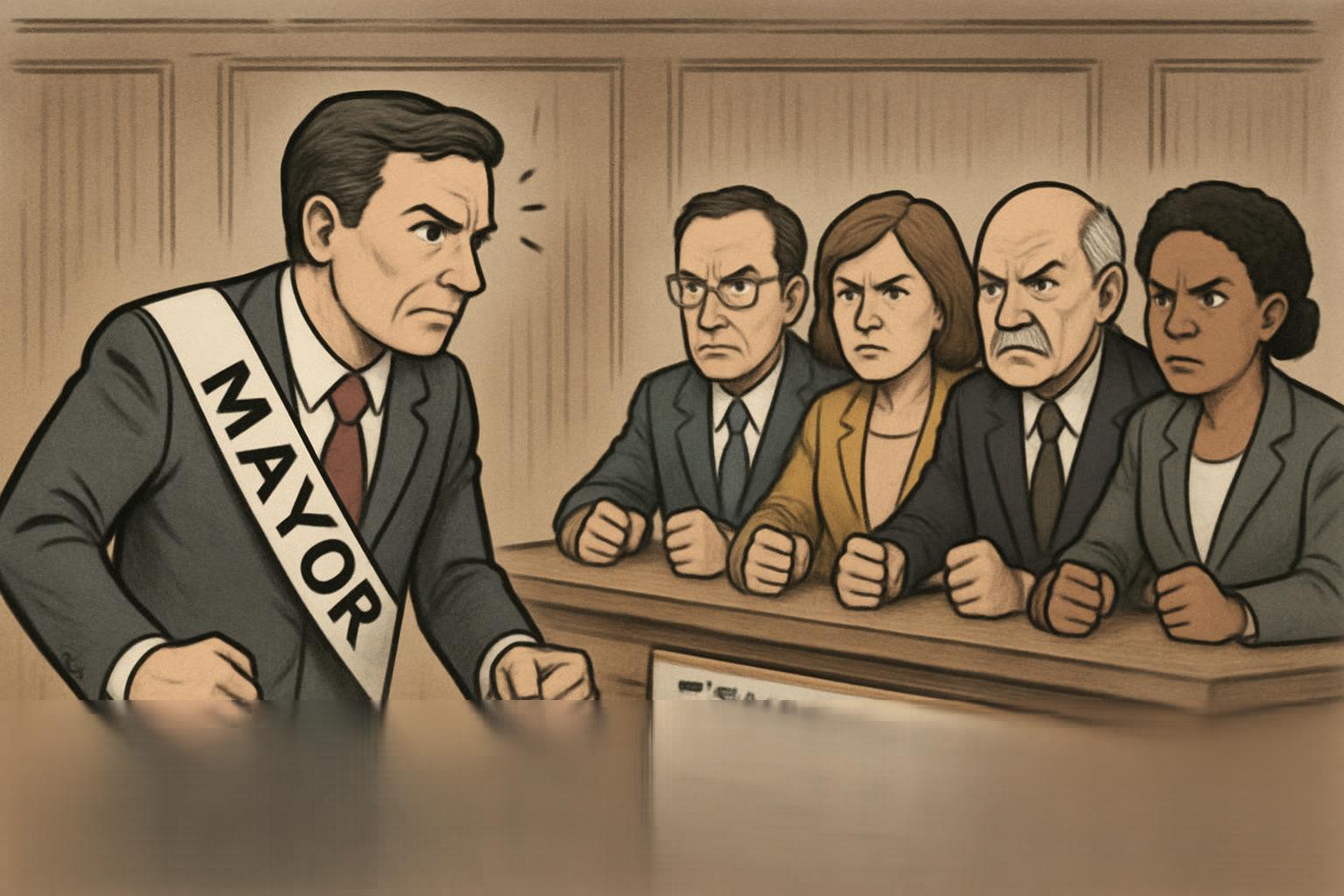
MARION, Va. — During Monday evening’s Marion Town Council meeting, Mayor Avery Cornett addressed what he views as growing attempts by council members to limit the authority of the mayor’s office and block requests for information. His remarks centered on the powers and responsibilities outlined in the town charter — particularly those related to transparency and departmental oversight.
Under Section 2-81 of the Marion Town Charter, the mayor is required to attend council meetings, preside over them, and vote on all matters. The charter states that the mayor must familiarize himself with the operations of each town department — not just those under his immediate supervision — and report back to the council with recommendations. The section also establishes the mayor as the official head of the town.
In addition, Section 2-81(b) grants the mayor general supervision of all departments and the authority to suspend town officers and employees, excluding council members. These provisions affirm the mayor’s role as an active participant in the governance and oversight of town operations.
Despite these clearly defined duties, there appears to be an increasing pattern of obstruction when the mayor seeks information from various town departments. Some members of council have reportedly resisted requests for departmental updates or access to routine operational information, potentially hindering the mayor’s ability to fulfill his responsibilities. Most recently, Susie Jennings who went on record at the most recent August 4th council meeting to justify her prior commentary about the matter of water bills being discussed in closed session under personnel in a lengthy explanation in her own words about the process of personnel committee operations.
The mayor’s position differs from that of the town manager, whose duties are outlined in Sections 2-101 through 2-104. The town manager oversees the daily administration of the town, manages appointments, prepares budgets and reports, enforces ordinances, and supervises expenditures. The town manager holds administrative control over all departments, while the council is prohibited from giving orders to town staff or interfering in appointments.
The tension arises in how these roles intersect. While the town manager is responsible for managing operations, the mayor’s authority includes oversight — a function distinct from administration. This oversight is not only a legal duty but also a necessary check in a government system meant to remain transparent and accountable to its citizens.
Concerns have grown among residents about whether efforts by the council to withhold information from the mayor reflect an attempt to centralize power. The mayor, meanwhile, continues to seek clarity, request answers, and push for open governance in accordance with the town’s charter.
As the town navigates these ongoing issues, the mayor’s office appears focused on fulfilling its duties to the public and ensuring that government remains open, responsive, and aligned with the law.
Mayor Avery Cornett is widely regarded as a pleasant and approachable leader who genuinely cares about the well-being of the community. Known for his friendly demeanor and respectful manner, he makes himself readily available to citizens and consistently takes the time to listen to their comments, questions, and concerns. Whether it’s through attending public events, responding to messages, or engaging with residents one-on-one, Mayor Cornett demonstrates a sincere commitment to staying connected with the people he serves. His openness and willingness to hear all voices reflect a leadership style grounded in accessibility, transparency, and community-focused service.

