
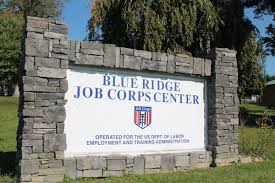
The U.S. Department of Labor announced Thursday that it will begin a “phased pause in operations” at all contractor-run Job Corps centers nationwide, including the long-standing Blue Ridge Job Corps Center (BRJCC) in Marion. The decision, according to the department, is based on financial deficits, underwhelming program outcomes, and a high volume of serious incidents, including violent episodes.
In a statement, the department said the move aligns with the President’s fiscal year 2026 budget and reflects a broader effort to ensure federal workforce investments yield measurable returns for students and taxpayers. The closure of the Blue Ridge center is expected to be finalized by June 30.
The announcement has sparked strong opposition from Marion officials, who are speaking out against the shutdown of the center, which has served the community since 1967.
Mayor Avery Cornett swiftly issued a letter detailing the potential fallout of the closure, warning that it would disrupt the lives of both students and staff and damage the local economy. “As the Mayor of Marion, Virginia, I stand firmly with our Council, community leaders, educators, and families in voicing our unwavering support for this critical institution,” Cornett stated.
Ken Heath, the town’s director of community and economic development, confirmed that local leaders are in direct contact with federal lawmakers. He also said the Marion Town Council is expected to pass a formal resolution opposing the closure during its meeting on Monday. Mayor Cornett has pledged his support for the resolution.
The Blue Ridge Job Corps Center was originally established on the former campus of Marion College, a Lutheran junior college for women. William Fields, a longtime employee with over 30 years of service at the center, confirmed its deep community roots.
Established in 1965, Job Corps is the nation’s largest federally funded job training and education program for young adults aged 16 to 24. At its peak, the Blue Ridge center served up to 192 students, offering programs in healthcare fields such as Clinical Medical Assistant, Medical Administrative Assistant, and Patient Care Technician. The center also provides academic support, including GED preparation, high school diploma completion, and English language training.
Though Blue Ridge focused on healthcare, Job Corps centers across the country offer vocational training in industries ranging from construction and advanced manufacturing to information technology and hospitality.
The Department of Labor said its decision follows a comprehensive internal review and is intended to support “an orderly transition for students, staff, and local communities.” Officials said they are coordinating with state and local workforce organizations to help affected students continue their training or find new opportunities.
“Job Corps was created to help young adults build a pathway to a better life through education, training, and community,” said Secretary Lori Chavez-DeRemer. “However, the large number of serious incidents and financial inefficiencies indicate the program is not achieving the outcomes that students deserve. We are committed to helping all current participants successfully transition.”
Financial challenges are significant. In 2024, Job Corps faced a $140 million deficit, projected to increase to $213 million in 2025. The department’s first-ever Job Corps Transparency Report, released in April, revealed that from July 1, 2023, through June 30, 2024, the national graduation rate was just 38.6%. The average cost per student exceeded $80,200, while post-program earnings averaged $16,695 annually.
At Blue Ridge specifically, the report noted 32 graduates, 31 disciplinary dismissals, and 44 other separations. Five cases of unauthorized absence were also reported. Out of 100 enrolled students, 71 were active at the start of the reporting period.
Nationwide, Job Corps centers recorded 14,913 serious incidents, including 1,765 categorized as violent.
The pandemic further strained the program’s residential model. During the early stages of COVID-19, students were forced into remote learning as centers temporarily shut down. When Blue Ridge reopened in April 2022, officials reported an abundance of open slots.
Mayor Cornett emphasized the center’s value not just to students, but to the community at large. “It not only equips individuals with job-ready skills but also strengthens the local workforce and promotes regional economic mobility,” he wrote. “I respectfully request that the Blue Ridge Job Corps Center be allowed to continue its mission of service, education, and opportunity for generations to come.”
Adding to community concern is the June 4 deadline for students to vacate the center and return to their last recorded residence. In Marion, the sudden displacement has raised fears of increased homelessness.
Bishop Nolan Wolfe of Antioch Greater Love Ministries has offered his church as a temporary shelter for students with nowhere else to go. In a Facebook post, he wrote: “Due to the closing of The Blue Ridge Job Corps Center. If any of the students have nowhere to go, Antioch Greater Love Ministries will open up our doors once again until you arrange other means! This will take some of the pressure off of frantically trying to find somewhere to go quickly.”
As the deadline approaches, community members and local leaders remain hopeful that their appeals will prompt federal officials to reconsider, or at least delay, the closure of what they see as a vital institution.

