
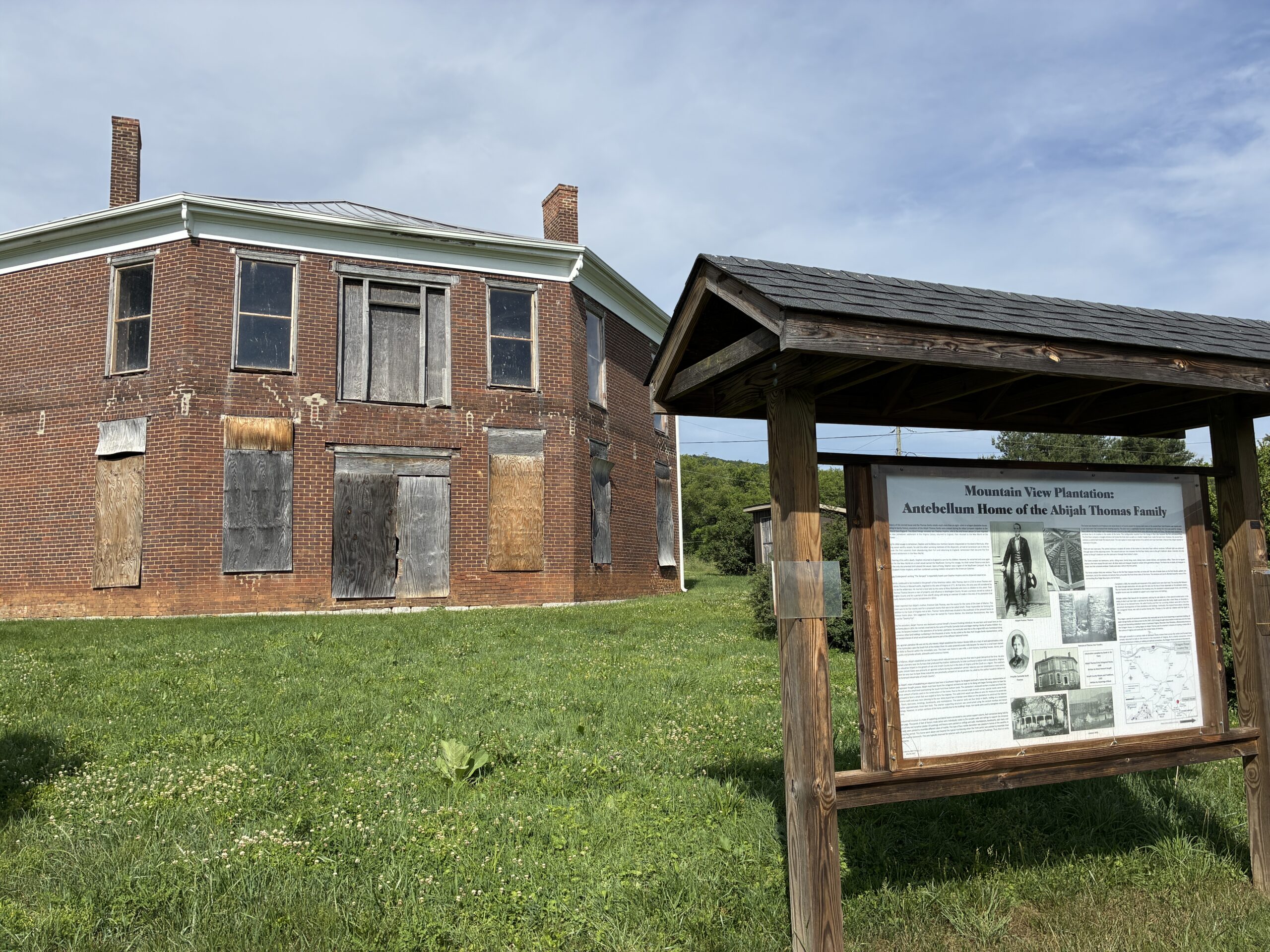
New Artifacts Donated to Smyth County History Museum as Octagon House Legacy Expands
Marion, Va. — The Smyth County Historical Society celebrated a major addition to the county’s historical record today as descendants of the Thomas family presented a new collection of artifacts tied to the Abijah Thomas Octagon House located in the Thomas Bridge community of Smyth County—one of the most distinctive and architecturally significant homes in Southwest Virginia. The items, donated by the family of Roberta Ledgerwood Dennis, will become part of the growing collections at the Smyth County History Museum in downtown Marion.
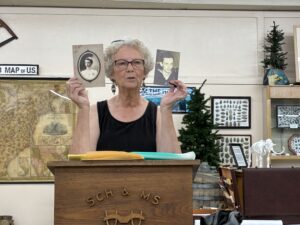
The event marked the first installment of a new series of gifts from the Octagon House lineage. Susan Amos, great‑great‑granddaughter of builder Abijah Thomas, introduced the collection and reflected on her family’s long connection to the eight‑sided home. She then introduced another member of the family, Roberta Ledgewood Dennis to speak further about these items.
She recalled childhood trips to see the house and shared stories passed down through generations, including the origin of the tear in Abijah’s portrait—caused by a tobacco stick—and her siblings’ childhood confusion over why no one smiled in 19th‑century photographs.
A Landmark Unlike Any Other in the Region
Built in 1856–57, the Octagon House—also known as Mountainview—stands as the only known eight‑sided residence constructed in Southwest Virginia before the Civil War. Inspired by Orson Squire Fowler’s national “octagon house” movement, the structure features 17 rooms, 32 windows, thick masonry walls, and a distinctive second‑floor promenade. Its triangular interior spaces, custom‑shaped hand made bricks, and complex roof system make it one of Smyth County’s most recognizable and iconic historic sites.
The home was built by Abijah Thomas, an early industrialist whose family helped shape the region’s development. Born in 1814, Thomas grew up on land his grandfather surveyed along the South Fork of the Holston River—property that later became the site of Holston Mills, one of the county’s earliest industries. Thomas operated iron furnaces, textile works, and leather operations, and built Smyth County’s first threshing machine.
The Thomas household included enslaved laborers whose craftsmanship remains visible today. Fingerprints of these people can still be seen in the handmade bricks of the Octagon House, a physical reminder of the people whose labor shaped the structure. “Some of the best brick people in the South came from the Black community,” Roberta Dennis noted. “Their work is literally built into the walls.”
Expanding the Story
There are long‑circulated myths surrounding the home’s windowless “dark room,” located at the center of the second floor. While folklore has cast it as a site of punishment or violence, family documents—including a 1940 account by daughter Priscilla C. Thompson—confirm it was simply a storage room for food, cotton batting, and government publications. Stains once rumored to be blood were caused by spoiled canned goods stored there long after the Civil War.
Speakers emphasized the importance of expanding the historical narrative to include the Black community and other overlooked groups. “We all use Mack Sturgill’s book like an encyclopedia,” one member said, “but there’s not a lot of additional information on the Black community. We are working on that as well.” Dennis said emphasizing the high quality of craftsmanship visible in the masonry of this historic home and the fingerprints that are still visible from the hands that created those brick present day.
The program also highlighted lesser‑known aspects of the Thomas family’s history, including the fact that Abijah arranged for all his grandchildren to be taught piano by a Black woman who lived in the home. The musical tradition continues today with a sixth‑generation pianist in the family.
Genealogical research shared at the event explored the possibility of Melungeon ancestry within the Cole family line—Abijah’s maternal relatives—and a distant connection to civil rights icon Rosa Parks. Two historic photographs were shown as examples of Melungeon characteristics, with presenters encouraging attendees to remain open‑minded and consult older historical sources such as original books and the elderly to learn the real and true stories about history.
Artifacts Returned Home
Among the newly donated items are original glassware from the Thomas household, family documents, and portraits whose artist remains unknown. The museum will also receive documentation detailing where the portraits were kept before their donation. One of the most significant pieces—a portrait of Abijah Thomas—was saved from a fire as described by Roberta Ledgerwood Dennis, preserving it for future generations.
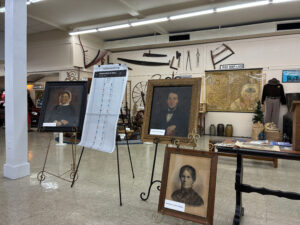
“This is another chapter in the Octagon House,” said Derek Orr, of the Octagon House Foundation. “We get to go forward with telling the stories of the people and the house. We are saving the largest historical artifact in this county to be given back to the county with the house.”
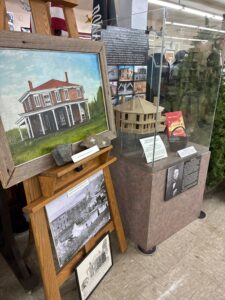
Ben Jackson, who has taken a leading role in researching the lives of the enslaved individuals connected to the property, emphasized the power of physical history. “You can go see and touch the things those people saw and touched,” he said. “You can connect with history in this physical way that still exists for us today.”
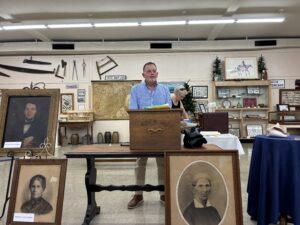
The event concluded with remarks from David Bridges, a descendant of Thomas Thomas and an author of historical fiction, who shared reflections on his family’s legacy and his work, including his novel series Eden’s Clan.
A Growing Legacy for Smyth County
With present donations and grants, the Smyth County History Museum continues to expand its role as a steward of local heritage. The Octagon House—long a symbol of the county’s early industry, craftsmanship, and complex history—remains central to that mission.
“The Octagon House is the story of us,” Orr said. “For multiple generations in the past, and for generations still to come.” He added that there would likely be no future “Open Window Tours” because the next time the whole house will be open thanks to grants that have been procured that will allow further interior restoration. A new roof was recently installed to protect the structure and interior.
For more information about the Abijah Thomas Octagon House or to donate to the preserve this piece of antebellum history, visit https://smythoctagonhouse.org/

