
This article was submitted prior but due to unforeseen circumstance was overlooked. An apology to the author that it was not up sooner.
Three County News Editor
MARION, Va. — The Smyth County Board of Supervisors met Tuesday evening for a wide‑ranging session dominated by school funding pressures, looming tax increases, departmental restructuring, and public concerns over transparency, debt, and the future of data centers in the county.
The meeting opened with approval of minutes from the previous session before moving into a series of presentations.
Representatives from 4‑H Camp requested continued county support as they prepare for the upcoming summer season. The camp currently has 190 youth enrolled and expects additional registrations before the May 22 deadline. Scholarship needs remain high, with 51 applications totaling $3,000.
Charlie Atkins, who served as camp president for 15 years, emphasized the program’s local roots and importance.
“Most people think 4‑H is supported by Virginia. It is all locally supported,” Atkins said, noting the camp has operated since 1954.
Supervisors unanimously approved requested support from discretionary funds.
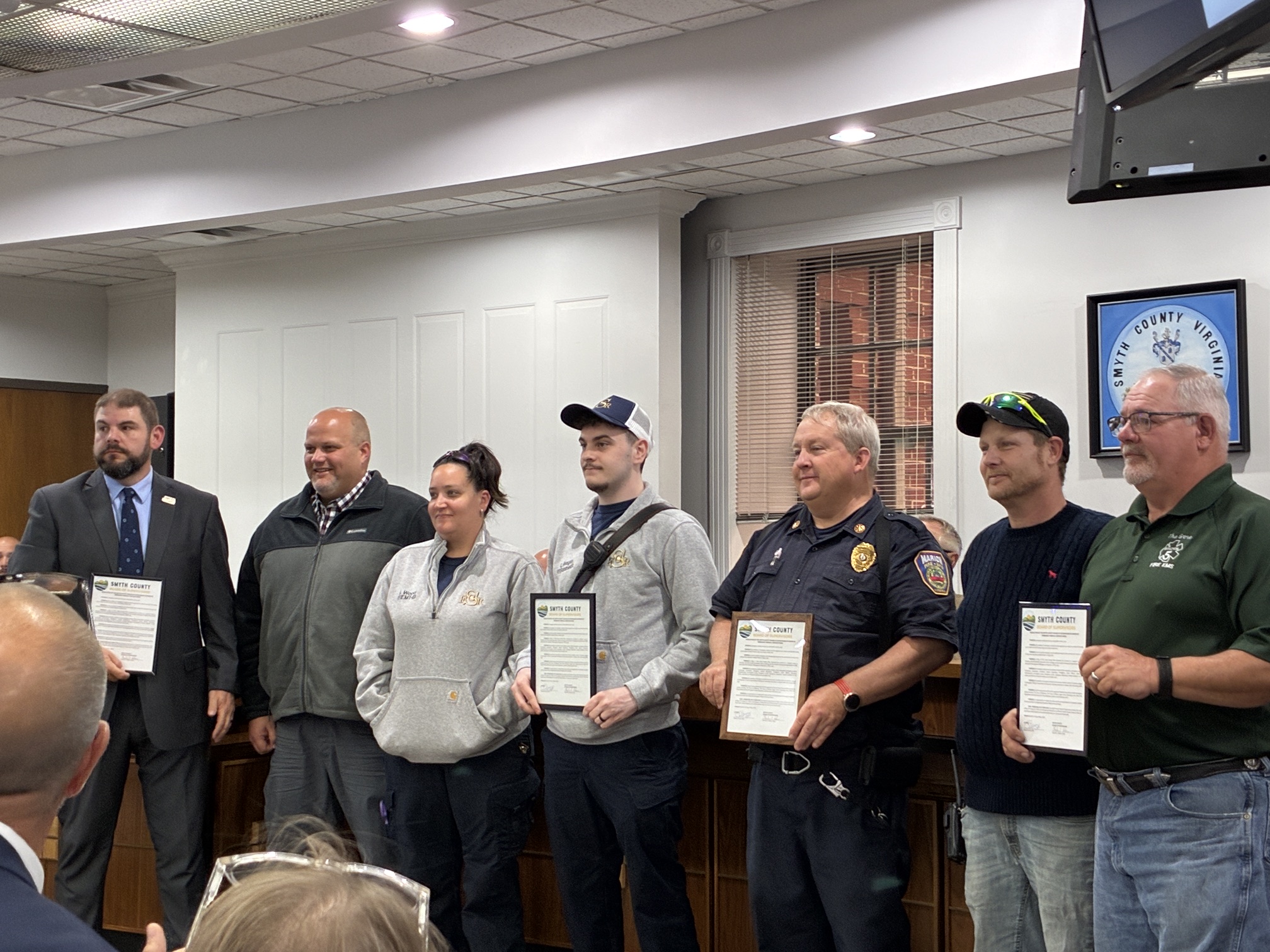
Courtney Widener presented a resolution recognizing National EMS Week, honoring emergency medical personnel in attendance. The board adopted the resolution by consensus.
Smyth County School Superintendent Dr. Brad Haga delivered a detailed briefing on the school division’s financial challenges, describing the state’s funding model as “broken for rural public education.”
Haga said this year brought a “perfect storm” of pressures:
-
Local Composite Index (LCI) increased, resulting in nearly $1 million in additional local obligation.
-
Enrollment continues to decline, with 41 fewer students than last year.
-
The FY budget is built on 3,417 students, at roughly $12,000 per pupil.
-
Health insurance costs rose 12.5%.
-
Virtual school costs totaled $190,000 for out‑of‑district students.
Haga warned that declining enrollment is forcing difficult staffing decisions.
“We may have to move employees around to compensate,” he said. “If you really dive into the numbers, we are faced with some really hard decisions.” “Enrollment keeps me up at night.”
He confirmed employees will receive bonuses this fiscal year and noted that retirements and resignations will not result in most positions being refilled.
During discussion, Atkins added that 23% of Smyth County students receive special education services, a significantly high proportion. Jason Parris of Rye Valley asked how Smyth’s enrollment trends compare to neighboring counties; Haga responded:
“Washington and Wythe aren’t losing as many as we are.”
Haga encouraged supervisors to contact him with questions about the figures.
County Administrator Shawn Utt outlined the county’s strained financial position.
“We have had a difficult year to start with,” Utt said, citing a hiring freeze and spending restrictions already in place.
Key points from the proposed budget:
-
At least 8 full‑time positions eliminated through attrition, saving $450,000.
-
Atkins EMS station to be consolidated with Saltville, saving $100,000.
-
FY27 Capital Improvements Plan suspended, saving $2 million.
-
Proposed tax and fee increases:
-
10¢ increase in real estate tax
-
5% increase in solid waste disposal
-
5% increase in water rates
-
10% increase in sewer rates
-
Utt noted that ARPA funds are no longer reflected in the budget, significantly affecting revenue projections. Public hearings on the proposed increases will be held next Thursday.
Supervisor Kris Ratliff indicated that the county could explore solar energy options to reduce electric costs.
No citizens signed up to speak during the public hearing on the VDOT Six‑Year Plan. Projects include Hales Lake Road and Old Brunswick Road. Parris noted that prioritization considered school bus routes and student safety.
Larry Atwood, representing Sugar Grove Fire Department and Rescue Squad, requested documentation on a state PPE grant of approximately $100,000.
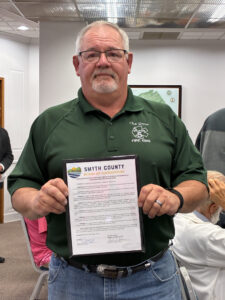
“At the end of the day we are ending up owing $2,500 on something we thought we were not going to be owing on,” Atwood said.
David Fulton of Marion reported that tax bills are sometimes mailed to incorrect addresses, noting he discovered a misdirected tax ticket only six weeks ago.
Dr. Wassum of Marion raised concerns about county debt and the national trend of localities seeking revenue from data centers.
He criticized chronic interest payments:
“We are paying millions in interest every year… I would make that number one if I were on the BOS — reduce debt down to zero.”
He warned supervisors to be cautious about data center recruitment:
“The data center is a control and surveillance mechanism… I would take a good look at data centers and don’t fall for the bait.”
Atkins responded that the county has implemented new bill‑paying procedures to avoid late fees and interest.
Brad Powers presented a proposal for the next countywide property reassessment at the last BOS meeting which was referenced at the current meeting. Utt noted the cost will be slightly lower than the previous reassessment and emphasized:
He “wasn’t particularly happy with the last reassessment,” and this cycle will use personnel from Smyth County.
(Three County News will follow up with additional questions on methodology, staffing, and timeline.)
The Treasurer is working to amend county code to allow lifetime dog licenses, similar to surrounding counties. Some dog categories cannot be removed from code due to state requirements.
The Rye Valley Water Authority received a $4 million grant for major water line improvements. Because the grant is reimbursement‑based, the Authority secured a loan from Bank of Marion and requested a county moral obligation.
Utt clarified:
-
The county is not liable unless the Authority defaults.
-
The theoretical exposure is $160,000, representing the local match.
-
Mount Rogers PDC will manage grant administration to prevent delays.
The board approved the request.
The Sheriff’s Office budget includes a $5,000 salary increase for all deputies to address recruitment challenges.
Clegg Williams reported on the Joint Ordinance Committee’s work to regulate data centers, which are not addressed in current zoning ordinances.
Key recommendations:
-
Distinguish small‑scale (under 40,000 sq. ft., under 10 MW) from large‑scale facilities.
-
Small‑scale permitted in industrial zones; all others require Special Use Permits.
-
Requirements include:
-
Decommissioning plan with a county‑held bond
-
Noise limit of 55 dB
-
60‑foot setbacks
-
Vegetative buffers
-
Minimized lighting
-
Enhanced public notice, including mailed notices and posted signage
-
Site plan submission
-
A public meeting will be held prior to the formal public hearing, which is scheduled for June 25.
The committee also discussed junkyards and home occupations; no action was taken.

