
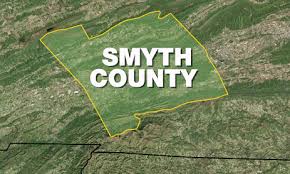
MARION, Va. — The Smyth County Board of Supervisors held a special called meeting Thursday evening to conduct a series of public hearings on the FY26 budget, school funding, utility rate adjustments, solid waste fees, and a proposed real estate tax increase. Attendance was fairly low, but a few residents offered pointed criticism of school administration, county spending priorities, and the impact of rising taxes on seniors and working families.
Board Chairman Charlie Atkins invited school Superintendent to present commentary. Superintendent Dr. Brad Haga was present but offered no remarks.
Public Comment on School Budget: Concerns Over Leadership, Technology Spending
Two residents spoke during the school budget hearing, both urging the Board of Supervisors to scrutinize how school funds are used.
Bill Stamper
Stamper said he supports funding the schools but stated that Superintendent Haga should not be entrusted with managing those funds. He referenced his repeated concerns at School Board meetings, alleging that Haga has “bullied kids” and that special education classrooms are no longer permitted to have microwaves and other specific items they’ve had in the past—an issue he said affects students with special dietary needs. According to Stamper, multiple parents have confirmed they are not allowed to send food requiring microwaving.
Stamper also criticized the superintendent’s compensation, stating that a FOIA response showed Haga earns “about $3,000 a week,” which Stamper said amounts to more than 10 percent of the budget line for his office before benefits. He urged the Board to consider categorical funding or oversight to ensure special education needs are met.
“The school needs their money,” Stamper said, “but if I had my way, they wouldn’t get it until Haga quits.”
Dr. Charles Wassum
Wassum focused his remarks on technology spending, arguing that the school system has become overly dependent on devices and software at the expense of foundational learning. He said the FY26 technology budget totals $1.8 million and suggested reducing it.
“You learn from books and studying,” he said, adding that students should first master reading, writing, and mental math before relying on calculators or digital tools. Wassum, who raised six children through a mix of public, private, and home schooling, also noted that he paid school taxes for years without having children enrolled, which he described as “unjust.”
Dr. Haga left the meeting immediately after the school public comment period concluded.
Solid Waste Tipping Fee Hearing
The county proposed increasing the landfill tipping fee from $80 per ton to $84 per ton. No citizens signed up to speak, and the hearing closed without comment.
Water and Sewer Rate Hearing
The county presented proposed rate increases across all customer classes:
-
Water: 5% increase for residential, commercial, and industrial users
-
Sewer: 10% increase for commercial, industrial, and enterprise users
No speakers came forward for this hearing.
Real Estate Tax Rate Hearing: Proposed Increase Draws Objections
The Board is considering raising the real estate tax rate from $0.59 to $0.69 per $100 of assessed value. Two residents spoke in opposition.
Dr. Charles Wassum
Wassum returned to the podium to argue that increasing property taxes is harmful to seniors and disabled residents living on fixed incomes. He referenced the Declaration of Independence, saying taxation was a central grievance in 1776, and contended that taxing property is fundamentally unfair.
He also criticized federal funding streams, arguing that federal dollars drive up local costs and contribute to inflation. Wassum said he had asked an AI system to define “inflation” and was given an incorrect answer, adding that “people who control AI control the narrative.”
“You are the people’s representatives,” he told the Board, urging them to “make do with what you have and not spend money on new things.”
Bill Stamper
Stamper shared a personal story about his father‑in‑law, who was 76 and battling cancer when the county last raised property taxes. He said the increase forced him out of retirement because his homeowner’s insurance also increased dramatically, making the combined costs unaffordable.
Stamper asked Board members to consider whether they would still vote for a tax increase if their own family members were in similar circumstances. “Whatever you say yes to now will affect your kids, grandchildren, etc.,” he said.
County Budget Hearing: Questions on Debt, Transparency, and Vehicle Use
The final hearing of the evening focused on the overall FY26 county budget.
Dr. Charles Wassum
Wassum said many residents no longer attend budget hearings because they do not believe their input will make a difference. He urged the county to reduce debt, stating, “The debtor is a slave,” and argued that all county revenue ultimately comes from taxpayers.
He also called for greater specificity in budget documents, saying that broad categories such as “mental health” should identify the exact organizations receiving funds using Mount Rogers as one such specific example. Wassum questioned where casino and lottery revenue appears in the budget and said residents were originally led to believe such revenue would result in tax decreases.
David Fulton
Fulton raised concerns about fuel costs, which he said are among the county’s highest budget expenses. He asked whether the county had considered installing GPS tracking on county vehicles, noting he had seen county‑marked sedans in Bristol and questioning whether those trips were legitimate county business.
County Administrator Shawn Utt responded that many water and sewer suppliers are located in Bristol and that sheriff’s office personnel also conduct business there. Fulton clarified that he had seen cars—not trucks—bearing county emblems. Chairman Atkins listed several reasons county vehicles might be in the area but said, “We don’t feel that we need to invest in that system.”
Utt added that he would be willing to investigate specific incidents if Fulton could provide tag numbers and agreed that any non‑business use of county vehicles would be unacceptable.
Hearings Conclude
After all comments were heard, Chairman Atkins closed the public hearings. The Board of Supervisors is expected to deliberate on the proposed FY26 budget, tax rate, and utility adjustments in the coming weeks.

